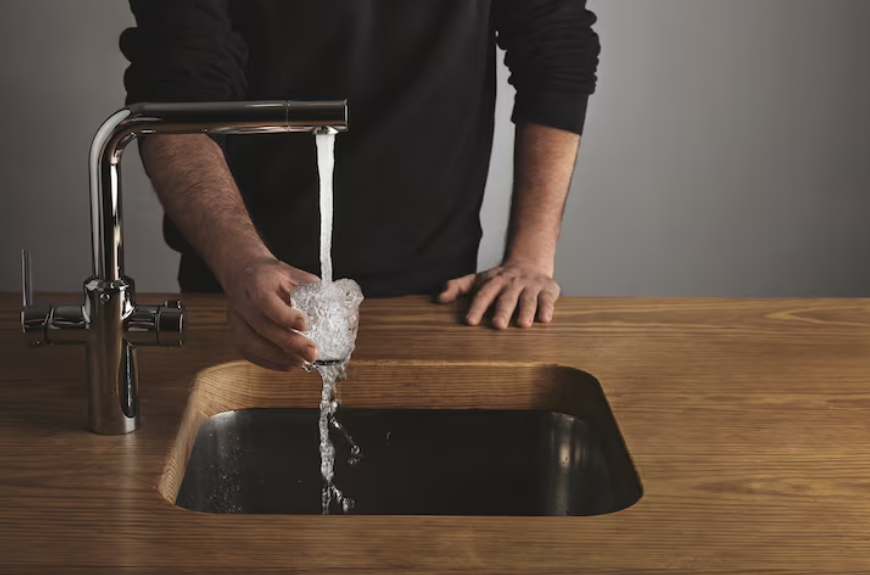
From the moment water is collected from natural sources until it reaches a household tap, understanding how water gets to your faucet shows the many stages designed to ensure safety, reliability, and consistent pressure.
Most people rarely think about what happens after turning on a faucet. Clean water appears instantly for drinking, cooking, cleaning, and bathing, often with little awareness of the enormous infrastructure working behind the scenes. Yet delivering safe water to millions of homes and businesses every day requires one of the most complex public utility systems in modern society.
Water travels through a carefully managed network involving reservoirs, treatment plants, pumping stations, underground pipes, testing systems, and local distribution infrastructure.
Where Municipal Water Comes From
Most municipal water systems begin with natural freshwater sources such as rivers, lakes, reservoirs, or underground aquifers. Reservoirs are among the most common sources because they allow cities to store large amounts of water for long-term use.
Reservoirs are often created by building dams across rivers or valleys, forming controlled storage areas that can supply water throughout the year. These systems help cities maintain stable water access during dry seasons or periods of increased demand.
Some communities rely heavily on groundwater instead. Wells draw water from underground aquifers, natural layers of rock and soil that hold freshwater beneath the surface. Groundwater is often naturally filtered through soil and rock, though it still requires treatment before public use.
Coastal regions sometimes use desalination plants, which remove salt from seawater. While effective, desalination is expensive and energy-intensive compared to traditional freshwater systems.
Before entering the treatment process, raw water may contain sediment, bacteria, algae, chemicals, or other contaminants that must be removed to make the water safe for consumption.
See How Recycling Programs Actually Operate for a related public system.
How Water Treatment Plants Clean the Water
Once collected, water travels to treatment facilities, where it undergoes multiple stages of treatment. The exact process varies by location and water source, but most systems follow similar general steps.
The first stage often involves screening, in which large debris such as sticks, leaves, and trash is removed. Water then moves into coagulation and flocculation systems, where treatment chemicals help small particles clump together into larger masses called floc.
These heavier particles settle during sedimentation, allowing much of the suspended material to be removed from the water. Afterward, the water passes through filtration systems made of sand, gravel, charcoal, or specialized membranes that capture smaller contaminants.
Disinfection is one of the most important stages. Utilities commonly use chlorine, ultraviolet light, ozone, or combinations of these methods to kill harmful microorganisms and reduce disease risks.
Public water systems are heavily monitored for safety. Treatment plants continuously test water quality for bacteria, chemical contaminants, pH levels, and other factors regulated by health and environmental agencies.
Even after treatment, utilities often maintain low disinfectant levels in the water as it travels through the distribution system to help prevent contamination before it reaches customers.
Read How Utility Bills Are Calculated to understand household service systems.
How Water Travels Through Cities
After treatment, clean water enters a vast distribution network of underground pipes, storage tanks, and pumping stations. Gravity plays an important role in many systems, especially where elevated water towers or hillside reservoirs help maintain water pressure naturally.
Water towers serve multiple purposes. In addition to storing water reserves, they stabilize pressure throughout the system. Higher elevation creates pressure that helps consistently push water through pipes into homes and businesses.
Pumping stations assist when gravity alone is insufficient. Large electric pumps move water across long distances or uphill through distribution pipelines.
The pipe network beneath cities is enormous. Some urban water systems include thousands of miles of underground pipes connecting treatment facilities to neighborhoods, schools, hospitals, businesses, and fire hydrants.
Utilities constantly monitor pressure and flow rates to detect leaks or system problems. Aging infrastructure remains a major challenge in many regions because older pipes can crack, corrode, or fail over time.
Fire protection is another important part of municipal water design. Systems must maintain enough pressure and reserve capacity to supply fire hydrants during emergencies while still serving normal household demand.
Check Why Some Roads Last Longer Than Others for an infrastructure example.
Why Water Quality and Infrastructure Matter
Maintaining safe drinking water requires continuous investment and oversight. Water systems operate around the clock, and utilities must prepare for weather events, droughts, equipment failures, contamination risks, and growing population demands.
Extreme weather can place major strain on water infrastructure. Drought conditions may reduce reservoir levels, while floods can increase contamination risks or overwhelm treatment facilities.
Water conservation has become increasingly important in many regions facing population growth and climate pressures. Utilities encourage conservation through public education, tiered pricing systems, and restrictions during severe shortages.
Infrastructure modernization is another major issue. Many cities still rely partly on pipes installed decades ago. Replacing aging systems is expensive but necessary to reduce leaks, improve reliability, and protect water quality.
Smart technology is becoming more common as well. Digital sensors, automated monitoring systems, and advanced leak detection tools help utilities identify problems more quickly and manage water systems more efficiently.
Explore How Personal Risk Assessment Works for another look at safety decisions.
A Hidden System Supporting Everyday Life
Clean running water is one of the most important conveniences of modern life, yet most of the infrastructure making it possible remains invisible beneath streets and inside treatment facilities.
Every glass of water, shower, dishwasher cycle, or load of laundry depends on a carefully coordinated system operating continuously behind the scenes. Reservoirs, treatment plants, pipes, pumps, and testing systems all work together to deliver safe water reliably every day.
Although people often take water access for granted, modern municipal water systems are among the largest and most essential engineering achievements in public infrastructure.