Breaking down how package delivery works reveals the enormous network of systems, technology, warehouses, vehicles, and workers involved behind the scenes. Modern package delivery is one of the most complex logistical operations in everyday life.
Ordering a product online feels almost effortless. A few taps on a phone or clicks on a computer, and within days, sometimes hours, a package appears at the front door.
From the moment an order is placed to the second it reaches a doorstep, a package may pass through multiple facilities, travel hundreds or thousands of miles, and interact with highly automated systems designed to move millions of shipments efficiently every day.
What Happens Immediately After You Click “Buy”
The delivery process begins the moment an online order is confirmed. Retailers first verify payment information and confirm inventory availability. If the product is in stock, the order is routed to a fulfillment center or warehouse closest to the customer whenever possible.
Modern warehouses are far more advanced than simple storage buildings. Many use barcode systems, robotics, conveyor belts, and artificial intelligence to track inventory and efficiently direct workers. Employees, or robotic systems in some facilities, locate the ordered item, scan it, and prepare it for packing.
Packaging itself is carefully optimized. Companies try to balance product protection, shipping costs, and speed. Smaller boxes reduce transportation expenses because carriers often base pricing in part on package dimensions as well as weight.
Once packaged, the shipment receives a tracking barcode. This barcode becomes the package’s digital identity throughout its journey. Every scan updates the delivery system and helps both the retailer and customer monitor progress in real time.
See How Product Barcodes Changed Retail Forever for a related tracking system.
How Packages Move Through Sorting Networks
After leaving the warehouse, packages typically enter a regional sorting network operated by carriers such as UPS, FedEx, USPS, DHL, or Amazon’s growing delivery infrastructure. Sorting hubs are massive logistical centers where packages are grouped according to destination.
Inside these facilities, conveyor systems rapidly scan and route shipments using automated technology. Thousands of packages may move through a single hub every hour. Sophisticated software calculates the most efficient route for each item based on distance, transportation availability, delivery deadlines, and weather conditions.
Packages often travel farther than customers expect. A shipment may first move to a major regional hub before being redirected toward its final destination. While this may seem inefficient, centralized sorting systems enable carriers to process extremely high volumes of packages more effectively.
Transportation methods vary depending on distance and urgency. Ground shipments usually move by truck, while faster deliveries may travel by cargo aircraft between large distribution centers. Rail systems are also sometimes used for long-distance freight movement.
The tracking updates customers see are generated every time the package barcode is scanned during these transitions. Messages such as “Departed Facility” or “In Transit” indicate specific points in the logistics chain.
Read How Modern Maps Became Standardized for another routing system.
Why Last-Mile Delivery Is So Difficult
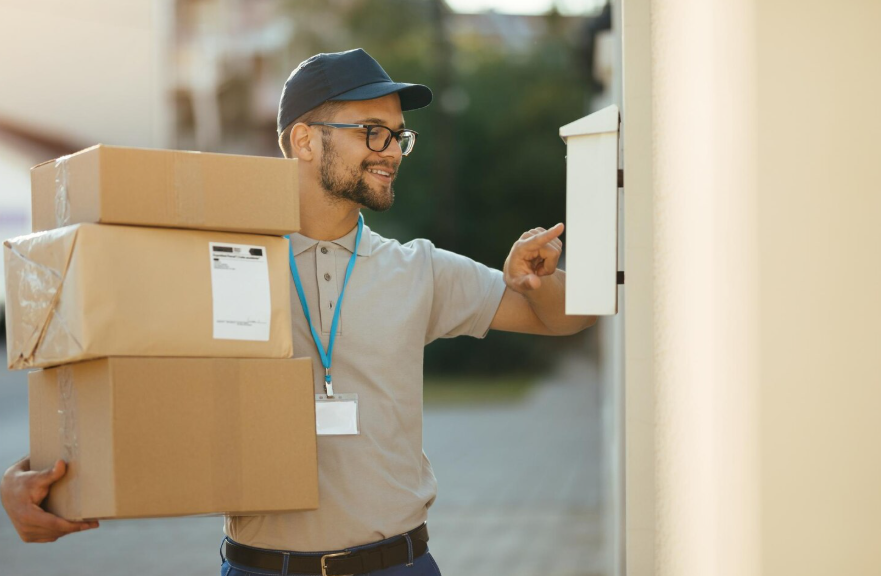
One of the most expensive and challenging parts of the entire process is the “last mile,” the final stage where a package travels from a local distribution center to the customer’s home.
Although long-distance transportation receives much attention, last-mile delivery poses major logistical challenges because drivers must make numerous individual stops across neighborhoods, apartment complexes, businesses, and rural areas. A single route may involve hundreds of deliveries in one day.
Delivery companies use route optimization software to improve efficiency. These systems calculate the fastest delivery order based on traffic patterns, package volume, weather, and road conditions. Even small improvements in routing can save enormous amounts of fuel and labor costs across millions of deliveries.
Urban deliveries present different challenges than rural ones. Dense cities may create parking difficulties and building access issues, while rural areas involve long driving distances between stops. Carriers must constantly balance speed, cost, and reliability across very different environments.
Package theft has also become a growing concern in the era of online shopping. Many companies now offer delivery lockers, secure pickup locations, photo confirmation, or scheduled delivery windows to reduce the risk of theft.
Check Why Some Roads Last Longer Than Others for a related transport issue.
The Technology Powering Modern Deliveries
Modern package delivery relies heavily on data and automation. Artificial intelligence helps forecast shipping demand, predict delays, and optimize warehouse operations. Machine learning systems can even anticipate which products customers are likely to order and position inventory closer to high-demand regions before purchases occur.
GPS tracking allows companies to monitor vehicle movement in real time. Customers can often see estimated delivery windows accurate to within a few hours, or sometimes minutes. This level of visibility would have been impossible only a few decades ago.
Weather forecasting also plays an important role. Storms, extreme temperatures, and transportation disruptions can affect entire shipping networks. Carriers continuously adjust routing plans when major disruptions occur.
Seasonal demand creates additional pressure. During holiday shopping periods, package volume can surge dramatically, forcing companies to hire temporary workers, expand transportation capacity, and extend delivery schedules.
Sustainability has also become a growing focus within the shipping industry. Companies are experimenting with electric delivery vehicles, reusable packaging, route-efficiency improvements, and alternative delivery methods such as drones and autonomous robots.
Explore The Technology Behind Weather Forecasts for another data-driven system.
A Massive System Most People Never See
What feels like a simple online purchase actually depends on one of the most advanced logistical systems ever created. Every package delivery represents coordination between retailers, warehouses, software systems, transportation networks, and local delivery teams working together at an enormous scale.
Most people only experience the final moment, the package arriving at the door. Hidden behind that convenience is a carefully synchronized chain designed to move products across cities, countries, and continents with remarkable speed and precision.