
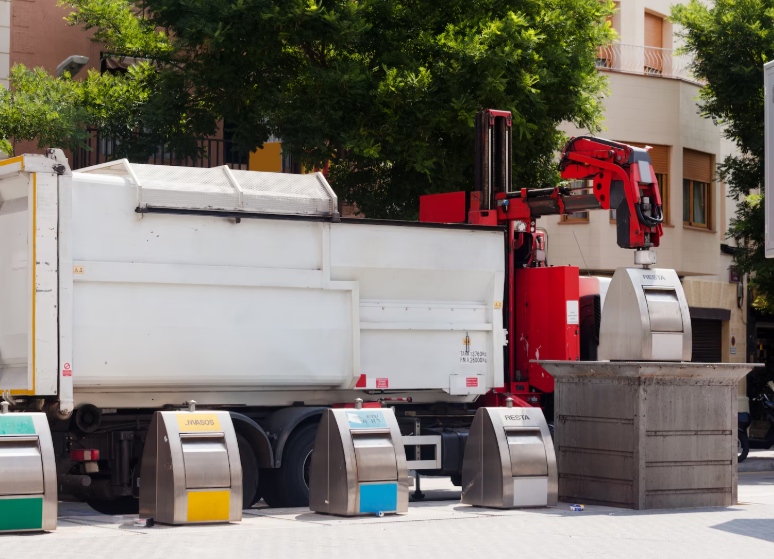
Although recycling plays an important role in reducing waste and recovering valuable materials, understanding how recycling programs work shows the process is far more complicated than many people realize.
Recycling is often presented as a simple habit: place paper, plastic, metal, and glass into a recycling bin, and the system takes care of the rest. In reality, recycling programs are highly complex operations involving collection systems, sorting technology, global commodity markets, contamination management, and industrial processing facilities.
Not everything placed in a recycling bin can actually be recycled, and the success of a recycling program depends heavily on how materials are collected, sorted, and processed afterward.
What Happens After Recycling Is Collected
The recycling process begins with collection. Municipal recycling trucks collect materials from homes, businesses, and public recycling stations before transporting them to specialized facilities called Materials Recovery Facilities (MRFs).
At these facilities, recyclables are unloaded onto conveyor systems where workers and machines separate materials into categories such as cardboard, paper, plastics, aluminum, steel, and glass.
Modern sorting facilities rely heavily on automation. Magnets pull steel items from the stream, while eddy current systems repel aluminum into separate collection areas. Optical scanners identify different plastic types using infrared technology, allowing machines to sort materials rapidly by resin type and color.
Human workers still play an important role because contamination and unusual items can confuse automated systems. Employees often manually remove non-recyclable objects to prevent equipment damage or contamination of material batches.
Once sorted, recyclable materials are compressed into large bales and shipped to manufacturers or processing plants that transform them into usable raw materials for new products.
See How Product Barcodes Changed Retail Forever for another tracking system.
Why Contamination Is a Major Problem
One of the biggest challenges facing recycling programs is contamination. Recycling contamination occurs when non-recyclable items are mixed into recycling bins or when recyclable materials are dirty or improperly prepared.
Food residue is a common issue. Greasy pizza boxes, partially filled containers, and unwashed food packaging can contaminate entire batches of paper or plastic. Some materials that appear recyclable are not accepted in many local programs because they are difficult or uneconomical to process.
Plastic bags create another major problem. They often become tangled in sorting machinery, forcing facilities to shut down equipment for maintenance and repairs. This is why many recycling programs ask residents not to place loose plastic bags in curbside bins.
“Wishcycling” has also become increasingly common. This happens when people place questionable items into recycling bins, hoping they will somehow be recyclable. While well-intentioned, this practice increases sorting costs and contamination rates.
High contamination levels can cause entire shipments of recyclables to be rejected and diverted to landfills instead. Successful recycling depends heavily on public participation and proper sorting habits.
Read How to Evaluate Information Online More Effectively before trusting recycling claims.
Not All Materials Are Equally Recyclable
Different materials have very different recycling values and processing limitations.
Aluminum is one of the most valuable recyclable materials because it can be recycled repeatedly with relatively little loss in quality. Recycling aluminum also uses far less energy than producing new aluminum from raw ore.
Paper and cardboard are widely recyclable as well, although fibers weaken after repeated processing cycles. Eventually, paper fibers become too short for further reuse.
Glass can technically be recycled indefinitely, but transportation costs and contamination issues sometimes make glass recycling less economically attractive in certain regions.
Plastic is often the most misunderstood material in recycling systems. Many plastics cannot be easily recycled because different types melt at different temperatures and require separate processing systems.
Even recyclable plastics may only be recyclable a limited number of times before the material quality degrades. Some plastic products are also too lightweight or inexpensive to process profitably.
Local recycling rules vary significantly because each region has different infrastructure, markets, and processing capabilities. A material accepted in one city may not be recyclable in another.
Check Why Certain Products Cost More Than Expected for another look at material value.
The Economics Behind Recycling Programs
Recycling is influenced heavily by economics. Recyclable materials are essentially commodities whose value rises and falls with global market demand.
When demand for recycled materials is high, recycling programs become more financially sustainable. When commodity prices drop, recycling facilities may struggle to operate profitably.
Transportation costs also matter because recyclable materials must often travel long distances to reach processing plants or manufacturers. Lightweight materials such as certain plastics may cost more to transport than they are worth commercially.
For years, many countries exported large amounts of recyclable waste overseas for processing. Changes in international import policies, especially stricter contamination standards, forced many recycling systems to adapt rapidly and improve sorting quality.
Governments often subsidize recycling programs because they reduce landfill usage and conserve raw materials, even when direct profits are limited.
Public education campaigns are also essential because effective recycling depends heavily on consumer behavior and proper material separation.
Explore Understanding Opportunity Cost in Daily Life for a related trade-off example.
Recycling Is Only One Part of Waste Reduction
Although recycling is important, waste experts often emphasize that reducing consumption and reusing products are even more effective environmental strategies.
Recycling still requires energy, transportation, and industrial processing. The most efficient waste-reduction methods often involve preventing unnecessary waste in the first place.
Reusable containers, repairable products, and reduced packaging can sometimes have greater environmental benefits than recycling alone.
At the same time, recycling remains a critical part of modern waste management systems. Recovering materials such as aluminum, paper, and certain plastics helps reduce resource extraction, conserve energy, and limit landfill growth.
The next time you place something in a recycling bin, it enters a surprisingly sophisticated system in which technology, logistics, economics, and environmental planning work together behind the scenes.