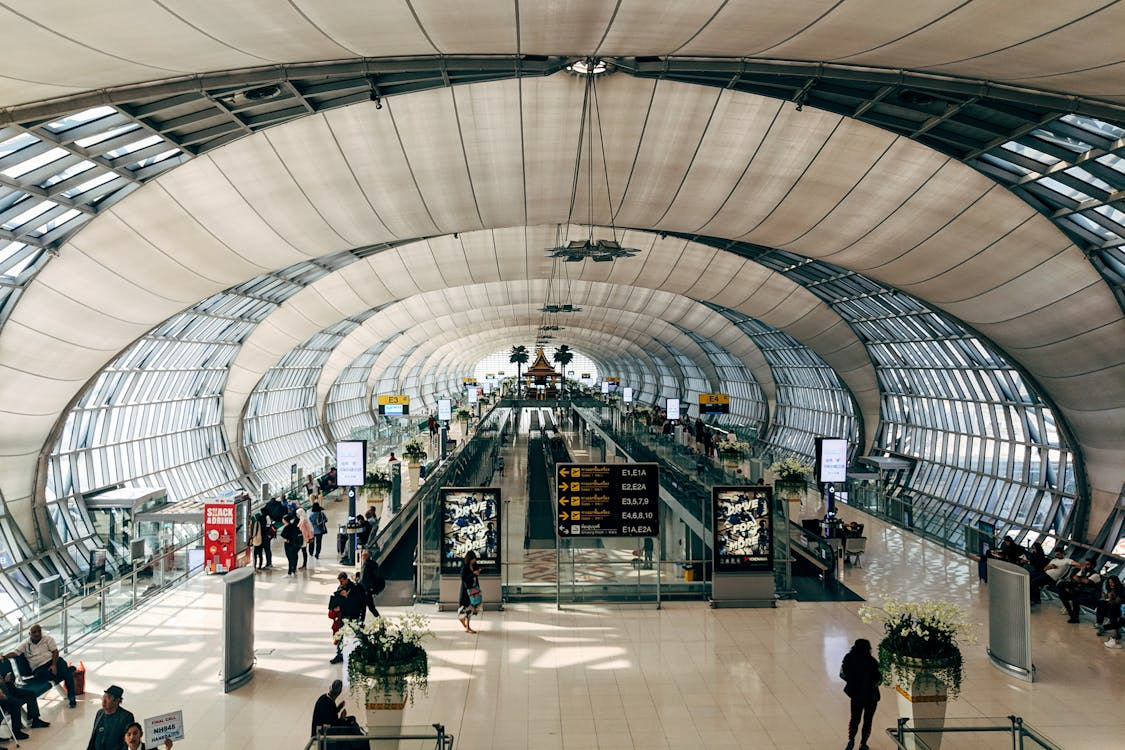
Airports function like miniature cities operating around the clock. Thousands, or even hundreds of thousands, of people may pass through a single airport every day while aircraft arrive and depart on tightly coordinated schedules.
Airports can feel overwhelming at times. Security checkpoints, boarding gates, baggage claim areas, terminals, moving walkways, restaurants, and endless directional signs all seem part of a carefully controlled maze. Yet modern airports are not arranged randomly. Every major decision in airport layout design reflects years of planning focused on security, logistics, passenger flow, safety, and operational efficiency.
To keep everything functioning smoothly, airports are carefully engineered environments designed to move both people and planes as efficiently as possible.
Why Airports Separate Arrival and Departure Areas
One of the first things travelers notice is that airports divide arriving and departing passengers into different flows. Departure areas are typically located before security checkpoints, while arriving passengers are routed through baggage claim and exit corridors after landing.
This separation helps reduce congestion and improve security management. Airports want passengers moving in predictable directions instead of creating unnecessary cross-traffic between different groups of travelers.
Security requirements also heavily shape terminal design. Since the early 2000s, airports around the world have expanded screening areas significantly to handle passenger checks, baggage scanning, and identity verification. Security checkpoints are intentionally positioned as controlled transition points between public and restricted zones.
International airports add another layer of complexity because customs and immigration systems must process travelers entering the country. International arrivals are often physically separated from domestic travelers until border procedures are completed.
Baggage systems are also organized around efficiency. Checked luggage travels through conveyor networks and sorting systems hidden beneath terminals, where automated scanners route bags toward the correct aircraft. Airports try to minimize the distance baggage must travel because shorter routes reduce delays and handling errors.
See Why Some Cities Have Better Public Transit Than Others for another transport system.
Why Gates and Terminals Are Arranged Strategically
Gate placement is carefully planned based on airline operations, aircraft size, and passenger traffic patterns. Airlines often cluster gates together within the same terminal to simplify connections and improve scheduling efficiency.
Large hub airports frequently organize terminals around airline alliances or major carriers. This reduces the need for passengers making connecting flights to travel long distances between terminals.
Aircraft themselves influence gate design significantly. Larger planes require wider spacing, stronger pavement, and longer boarding bridges. International flights may require additional waiting areas for customs processing or larger boarding zones for wide-body aircraft carrying hundreds of passengers.
Walking distance is another major consideration. Airports try to balance operational efficiency with passenger convenience. Some large airports use trains, trams, or moving walkways because terminals have expanded so dramatically over time.
Signage plays a surprisingly important role in airport organization. Clear directional systems reduce confusion and help maintain passenger flow. Airports use standardized symbols, colors, and layouts so travelers from different countries can navigate more easily, even without speaking the local language.
Retail and restaurant placement is also strategic. Shops and food courts are often located after security checkpoints because passengers tend to spend more time there waiting for flights. Airports generate substantial revenue from concessions, parking, and retail activity in addition to airline operations.
Read How Modern Maps Became Standardized for insights on navigation systems.
How Runways and Air Traffic Shape Airport Layouts
While terminals receive most passenger attention, runways and aircraft operations are actually the foundation of airport layout design. Runway placement depends heavily on wind patterns, surrounding terrain, and available land.
Aircraft generally prefer to take off and land into the wind because it improves lift and control. Airports study long-term weather data carefully before determining runway orientation.
Safety regulations require large clear zones around runways to reduce collision risks and provide emergency margins. This is one reason airports occupy enormous amounts of land, even when terminals themselves seem relatively compact.
Taxiways, which are the paths aircraft use to move between runways and gates, are designed to reduce congestion and minimize delays. Poor taxiway layouts can create bottlenecks that ripple throughout the entire airport system.
Air traffic control towers oversee these movements continuously. Controllers coordinate aircraft spacing, runway usage, departures, and arrivals to maintain safe separation between planes operating at high speeds.
Some airports operate multiple parallel runways simultaneously to increase capacity. Others face limitations because of geography, nearby development, or noise restrictions.
Check The Technology Behind Weather Forecasts for another system shaped by conditions.
Why Airport Security and Logistics Feel So Structured
Airports are among the most security-sensitive transportation environments in the world. Their organization reflects the need to balance safety with efficiency while handling massive passenger volumes daily.
Passenger movement is intentionally structured into stages: check-in, security screening, waiting areas, boarding zones, and arrival corridors. Breaking the process into controlled steps helps airports manage flow predictably.
Technology now plays a growing role in airport operations. Facial recognition systems, automated passport gates, digital boarding passes, and advanced baggage tracking all help streamline operations while maintaining security standards.
Emergency planning also shapes airport layouts. Airports must prepare for medical emergencies, severe weather, equipment failures, security incidents, and evacuation scenarios. Wide corridors, backup systems, and controlled access points all contribute to operational resilience.
Accessibility is another major consideration. Airports are designed to accommodate travelers with varying mobility needs, language backgrounds, and levels of travel experience.
Explore The Hidden Journey of a Package Delivery for another logistics network.
Airports Are Built for Constant Movement
Modern airports are essentially giant coordination systems built around movement. Every hallway, gate, runway, security line, and baggage conveyor exists to keep people and aircraft flowing as safely and efficiently as possible.
Although airports can sometimes feel stressful or confusing, their organization reflects decades of engineering, safety planning, and logistical refinement. The goal is not simply to move airplanes, but to manage enormous volumes of passengers, luggage, vehicles, and schedules within a tightly synchronized environment.
The next time you walk through an airport terminal, airport layout design is guiding your path through one of the most carefully organized transportation systems ever created, even if most of its complexity remains hidden behind the scenes.