
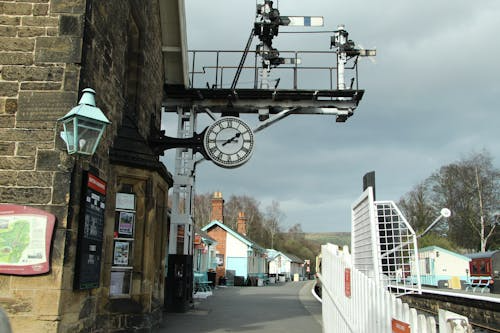
The invention of time zones was not simply about convenience. It became essential to railroads, commerce, navigation, and, eventually, the functioning of modern society itself.
As transportation and communication systems expanded during the 19th century, this lack of standardization became increasingly chaotic.
Today, people rarely think twice about time zones. A smartphone automatically updates local time when traveling, international meetings are scheduled across continents, and airline schedules coordinate departures around the globe with remarkable precision. Yet standardized time is a relatively modern invention. Before time zones existed, cities and towns often kept their own local time based on the position of the sun.
How Time Was Measured Before Time Zones
Before standardized timekeeping, most communities relied on local solar time. Noon occurs when the sun reaches its highest point in the sky at a specific location. Because the Earth rotates gradually, nearby cities could have slightly different local times even if they were relatively close together.
In small communities, these differences caused few problems. Daily life revolved around local schedules, and long-distance travel was slow enough that exact coordination mattered less.
Church bells, town clocks, and sundials helped residents keep track of local time. Mechanical clocks later improved consistency somewhat, but they still reflected each community’s own solar observations rather than a shared regional standard.
The situation became increasingly complicated as cities grew and transportation improved. By the mid-1800s, railroads connected regions that previously operated independently, creating major scheduling problems.
A traveler moving across multiple towns might encounter several slightly different local times within a single day. This created confusion for railroad companies trying to coordinate departures, arrivals, and train traffic safely.
See How Modern Maps Became Standardized for another standardized system.
Why Railroads Forced Time Standardization
Railroads became the primary driver of standardized time. As rail networks expanded rapidly during the 19th century, scheduling trains accurately became critical for both efficiency and safety.
Without standardized time, railroad timetables were difficult to manage. Different cities along the same route often use different local times, creating confusion for passengers and increasing the risk of scheduling errors.
Single-track rail lines made the problem even more dangerous because trains traveling in opposite directions had to coordinate carefully to avoid collisions. Inconsistent local times significantly complicated this process.
Railroad companies eventually realized they needed a unified system. In the United States and Canada, railroad operators worked together during the 1880s to divide the continent into standardized time regions.
On November 18, 1883, often called “The Day of Two Noons,” American railroads officially adopted standardized time zones across much of the country. Communities adjusted local clocks to match the new system.
This railroad-led change happened before the U.S. federal government formally adopted time zones by law. Public necessity and commercial efficiency pushed standardization forward faster than legislation initially did.
Read Why Some Roads Last Longer Than Others for a related transportation example.
How the Modern Time Zone System Works
The Earth rotates approximately 360 degrees every 24 hours. Dividing 360 degrees by 24 hours yields 15 degrees of longitude per hour, which formed the basis for modern time zones.
In theory, each time zone covers roughly 15 degrees of longitude. In practice, however, political boundaries, population centers, and economic relationships often shape time zone borders more than geography alone.
Countries frequently adjust time zone boundaries for convenience or national unity. China, for example, operates with a single official time zone despite spanning a geographic area large enough to support multiple zones.
International coordination became increasingly important as global communication expanded. In 1884, representatives from multiple nations met at the International Meridian Conference in Washington, D.C., where they established the Prime Meridian running through Greenwich, England.
This created the basis for Greenwich Mean Time, or GMT, which later evolved into the coordinated global time standards used today.
Modern systems now rely heavily on Coordinated Universal Time, commonly abbreviated as UTC. Atomic clocks provide extremely precise measurements used to synchronize global timekeeping systems.
Check Why We Measure Things the Way We Do for another measurement system.
Why Time Zones Still Create Challenges
Although time zones solved many coordination problems, they also introduced new complications that continue today.
Daylight Saving Time remains controversial in many regions. Some areas adjust clocks seasonally to extend evening daylight hours, while others do not participate at all. This creates temporary shifts in time relationships between regions during parts of the year.
International business operations must constantly coordinate across multiple time zones. Scheduling meetings, broadcasting live events, and managing global supply chains all require careful time calculations.
Travelers experience the effects physically through jet lag, which occurs when the body’s internal clock struggles to adjust to rapid time changes after crossing multiple zones.
Technology has made time zone management easier, but also more essential. Financial markets, airline systems, internet services, and communication platforms depend heavily on precise global synchronization.
Even computer systems and digital networks must account for time zone differences carefully to avoid scheduling errors, data mismatches, or security issues.
Explore Why Airports Are Organized the Way They Are for insights on scheduling systems.
Time Zones Help Organize Modern Life
The creation of time zones transformed the world by enabling large-scale coordination. Railroads helped drive the initial change, but standardized time eventually became essential for commerce, communication, transportation, and international cooperation.
What once seemed like a local matter tied to the position of the sun evolved into a global infrastructure system supporting modern civilization.
Today, time zones operate so seamlessly in daily life that most people rarely notice the enormous coordination happening behind the scenes. Yet every flight schedule, live broadcast, business meeting, and smartphone clock depends on a system created to solve the growing complexity of an increasingly connected world.