
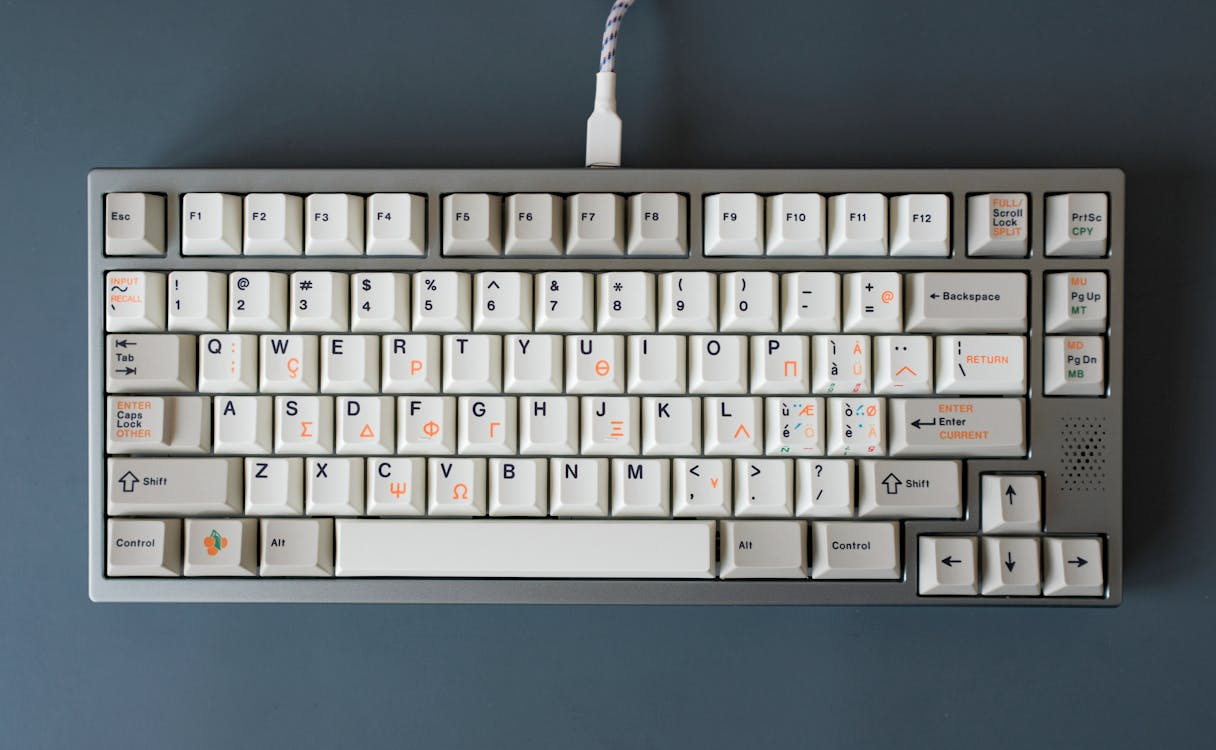
Over time, habit, compatibility, training, and widespread adoption transformed the QWERTY keyboard layout into one of the most enduring standards in modern technology.
Almost every computer keyboard, smartphone keyboard, and typewriter-style layout in the world follows the same familiar arrangement: QWERTY. The name comes from the first six letters across the top row of keys. Despite enormous technological advances over the past century, this layout remains the global standard for typing.
What makes the QWERTY keyboard especially interesting is that many people assume it was designed to maximize typing speed or efficiency. In reality, its origins were tied to mechanical limitations in early typewriters.
How Early Typewriters Influenced Keyboard Design
The origins of the QWERTY layout date back to the 19th century during the development of mechanical typewriters. Early typewriters used metal arms called typebars that swung upward to strike the ink ribbon against the paper.
One major problem with these early machines was jamming. If typists pressed nearby keys too quickly in succession, the typebars could collide and become tangled. Inventors needed a way to reduce these mechanical conflicts.
Christopher Latham Sholes, one of the key developers of the modern typewriter, experimented with different key arrangements during the 1860s and 1870s. The QWERTY layout eventually emerged as a practical solution that spread widely used letters far enough apart to reduce jams during fast typing.
Contrary to popular myths, QWERTY was not intentionally designed to slow typists down. Instead, it aimed to improve the reliability of mechanical machines by balancing typing speed with mechanical limitations.
The design gained widespread adoption after the Remington company began mass-producing typewriters using the QWERTY layout in the 1870s. As more businesses and schools adopted these machines, the layout became increasingly standardized.
See Why So Many Inventions Happened at the Same Time for shared invention timing.
Why QWERTY Survived Beyond Typewriters
Once QWERTY became widely adopted, switching to alternative systems became difficult even after typewriter technology improved.
Typing schools trained millions of students using QWERTY keyboards. Businesses standardized office equipment around the layout, and workers built years of muscle memory typing on QWERTY systems. This created a powerful network effect where consistency became more valuable than redesigning the system entirely.
Alternative keyboard layouts were developed over time. The most famous example is the Dvorak Simplified Keyboard, created in the 1930s. Dvorak attempted to improve typing efficiency by placing commonly used letters closer to the strongest fingers and reducing finger movement.
Some studies suggested Dvorak could improve speed and reduce fatigue, but widespread adoption never occurred. Retraining millions of typists and replacing existing systems created too much friction for most businesses and users.
Compatibility also mattered. As computers replaced typewriters in the late 20th century, manufacturers largely retained the QWERTY layout because users already knew how to type on them.
This continuity helped computers become more accessible to businesses and consumers, marking a transition from traditional office equipment.
Read Why Some Traditions Persist for Centuries for lasting habits and standards.
How QWERTY Became a Global Standard
Today, QWERTY is deeply embedded in global technology infrastructure. Computers, laptops, tablets, smartphones, ATMs, gaming systems, and even smart televisions frequently rely on variations of the layout.
Different countries have slightly adapted QWERTY to meet language needs. For example, many European keyboards include additional accented characters or rearranged punctuation keys. French keyboards commonly use the AZERTY layout, while German keyboards often use QWERTZ variations.
Despite these regional differences, the core concept remains remarkably consistent worldwide.
Software and operating systems are also built around QWERTY assumptions. Keyboard shortcuts, typing tutorials, ergonomic accessories, and productivity systems all depend heavily on familiarity with the layout.
Touchscreen devices reinforced QWERTY even further. When smartphones became widespread, manufacturers could have redesigned virtual keyboards entirely. Instead, most retained QWERTY because users already understood it intuitively.
Predictive text, autocorrect, and swipe typing technologies now help compensate for many inefficiencies associated with small digital keyboards.
Check Why Some Words Mean Different Things Around the World for regional variation patterns.
Why Keyboard Efficiency Is More Complex Than It Seems
Although debates about keyboard efficiency continue, typing performance depends on far more than letter arrangement alone.
Practice, familiarity, ergonomics, and typing technique often influence speed and comfort more significantly than the layout itself. Experienced QWERTY typists can reach extremely high typing speeds because their muscle memory becomes deeply ingrained over time.
Modern keyboards are also no longer constrained by the mechanical limitations that shaped early typewriter designs. Digital keyboards can process simultaneous inputs instantly without physical jamming issues.
Ergonomic keyboard designs attempt to address other concerns, such as wrist strain, finger fatigue, and repetitive stress injuries. Split keyboards, curved layouts, and customizable key mappings are now available for users seeking greater comfort.
Some programmers, writers, and enthusiasts still experiment with alternative layouts today, but QWERTY’s dominance remains extremely difficult to challenge because of its enormous installed user base.
Explore Why We Measure Things the Way We Do for standards shaped by history.
QWERTY Became More Than a Keyboard Layout
What began as a practical solution for mechanical typewriters eventually evolved into one of the most persistent technological standards in modern history.
QWERTY survived not necessarily because it is perfect, but because standardization creates enormous advantages. Once millions of people had learned the system and industries had been built around it, changing course became increasingly impractical.
The layout’s continued use demonstrates how technology often evolves. Early design decisions, even those shaped by outdated limitations, can persist for generations once they become deeply integrated into daily life.
Every time someone types an email, sends a text message, or uses a computer keyboard, they are interacting with a system whose origins trace back to the mechanical challenges of 19th-century typewriters.