
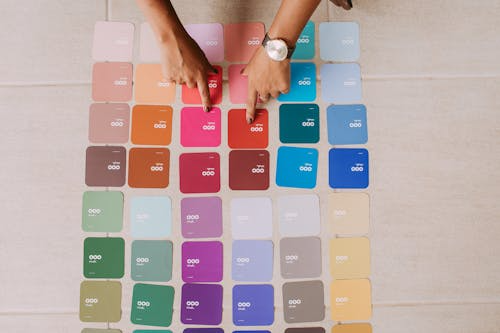
Certain colors repeatedly evoke similar reactions because humans have gradually attached meaning to them through history, biology, religion, culture, and shared experience.
Colors constantly influence human behavior, often without people fully realizing it. Traffic lights, warning labels, political branding, sports teams, marketing campaigns, and even restaurant interiors all rely heavily on color psychology and cultural associations.
Although color meanings vary somewhat across societies, many associations became deeply rooted over centuries of repeated use. The reason red signals danger, blue suggests calmness, or green represents nature is not entirely random. These meanings developed through long interactions between human perception and cultural symbolism.
How Biology Influences Color Perception
Some color associations may stem partly from basic human biology and survival instincts.
Red naturally attracts attention because it is visually intense and highly noticeable. In nature, red is often associated with blood, fire, ripeness, or warning signals. Humans tend to react quickly to red because it stands out strongly in the environment.
This visibility helps explain why red is commonly used for stop signs, emergency signals, warning lights, and hazard labels. It creates a sense of urgency and importance almost immediately.
Blue often produces the opposite effect. Clear skies and calm water are strongly associated with stability and safety, leading blue to become linked with calmness, trust, and reliability in many cultures.
Green is frequently associated with growth and life because of its connection to vegetation and healthy landscapes. This is one reason green is widely used for environmental branding, health-related products, and permission signals such as traffic lights.
Yellow is highly visible as well, making it useful for caution signs and alerts. However, excessive yellow can sometimes cause anxiety or overstimulation due to its brightness.
While biology influences some reactions, cultural interpretation plays an equally important role in shaping long-term symbolic meaning.
See Why People Overestimate Rare Events for another perception-based pattern.
Culture and History Shape Color Meanings
Color symbolism varies significantly across cultures because societies attach meaning to colors through religion, politics, traditions, and historical experiences.
White is a strong example. In many Western cultures, white is associated with weddings, purity, and cleanliness. In some Eastern cultures, however, white is traditionally connected with mourning and funerals.
Red carries different symbolic meanings globally as well. In China, red is strongly associated with luck, celebration, and prosperity. In other contexts, red may symbolize danger, passion, anger, or political ideology.
Purple historically became associated with royalty and wealth because purple dyes were once rare and expensive to produce. Only powerful or wealthy individuals could afford purple clothing in many ancient societies.
Black often symbolizes sophistication, authority, or elegance in modern fashion, while simultaneously representing mourning, fear, or mystery in other settings.
Religious traditions also heavily influenced color symbolism. Gold frequently became associated with divinity, wealth, and sacred imagery because of its rarity and visual brilliance.
Over centuries, repeated cultural usage reinforced these associations until they became deeply embedded within social expectations.
Read Why Some Words Mean Different Things Around the World for insights into cultural meaning.
Why Businesses and Brands Use Specific Colors
Modern marketing relies heavily on color psychology because colors strongly influence consumer perception and emotional response.
Fast-food restaurants often use red and yellow because these colors are believed to stimulate attention, energy, and appetite. Technology companies frequently use blue because it conveys trust, stability, and professionalism.
Luxury brands commonly rely on black, gold, silver, or deep neutral tones to create associations with sophistication and exclusivity.
Environmental organizations and natural product companies frequently use green to emphasize sustainability, health, or ecological awareness.
Color consistency helps build brand recognition as well. Certain companies become strongly associated with particular colors over time, making those colors part of the brand’s identity itself.
Retail environments also use color strategically. Warm lighting and color palettes may create feelings of comfort, while cooler tones can make spaces feel modern or professional.
Sports teams, political campaigns, and national flags all use colors intentionally because visual symbolism helps create emotional connection and group identity quickly.
Check Why Grocery Stores Are Designed the Way They Are for visual marketing example.
Color Meanings Continue Changing Over Time
Color symbolism is not completely fixed. Meanings evolve as societies, technologies, and cultural trends change.
New technologies introduced entirely new color associations. Neon colors became linked with nightlife and futuristic design during the late 20th century, while minimalist digital design trends later popularized softer neutral palettes.
Social movements and political events can rapidly reshape color meanings. Colors associated with activism, awareness campaigns, or political ideologies may gain new symbolic significance over time.
Fashion trends also influence public perception. Colors cycle through periods of popularity and cultural relevance depending on media, entertainment, and design trends.
Digital communication changed the use of color, too. Emojis, app interfaces, and social media platforms now reinforce certain emotional color associations globally through repeated exposure.
At the same time, many traditional meanings remain surprisingly durable because they are reinforced continuously through education, infrastructure, marketing, and shared social experiences.
Explore Why Some Traditions Persist for Centuries for another lasting social pattern.
Colors Act as a Visual Language
Colors function almost like a secondary language operating constantly in the background of modern life. They communicate emotion, urgency, identity, authority, safety, and meaning quickly without requiring words.
People often react to colors automatically because these associations have been reinforced repeatedly through biology, culture, history, and social conditioning.
Although color symbolism is not universal in every detail, many common meanings have become deeply established because they have proved effective across generations of human communication.
The next time a warning sign catches your attention, a brand color feels familiar, or a certain room creates a specific mood, color psychology is likely influencing your perception in ways you may not consciously notice.