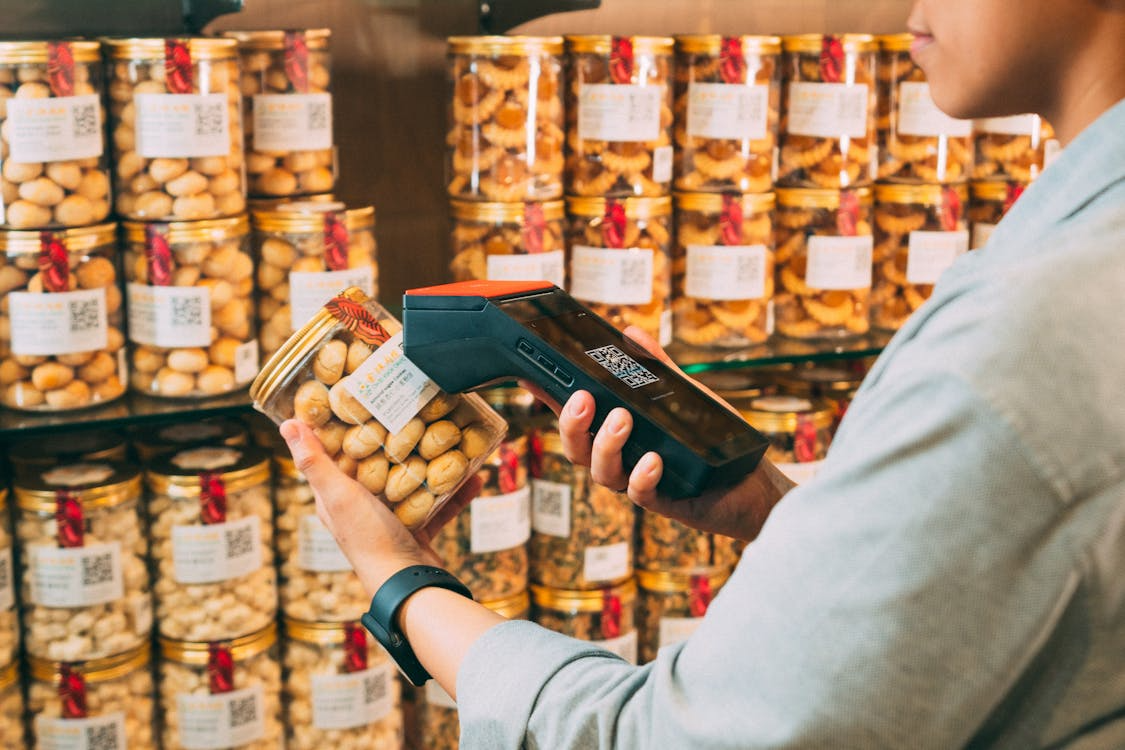
The barcode technology system introduced speed, accuracy, automation, and data collection capabilities that became essential to modern retail infrastructure.
Barcodes are one of the most overlooked technologies in modern life. Nearly every product purchased in a grocery store, pharmacy, warehouse club, or online fulfillment center carries a barcode that can be scanned instantly. Most people barely notice them anymore, yet barcodes transformed retail, logistics, inventory management, and global commerce in ways that permanently changed how businesses operate.
Before barcodes existed, stores tracked inventory manually, cashiers entered prices by hand, and retailers had far less visibility into what products were selling or where inventory problems existed.
Why Retailers Needed a Better System
Before barcode technology became widespread, checkout processes were much slower and more error-prone. Cashiers often typed prices manually or referenced printed price sheets for individual products.
This created several problems. Long checkout lines frustrated customers, pricing mistakes were common, and stores struggled to maintain accurate inventory records.
Inventory management itself was especially difficult. Retailers often relied on manual employee counts, which consumed significant time and labor. By the time inventory shortages were discovered, shelves might already be empty.
As supermarkets expanded during the mid-20th century, these inefficiencies became increasingly expensive. Stores carried thousands of products, and tracking them accurately through manual systems was becoming impractical.
Retailers began searching for ways to automate product identification and improve checkout speed. The challenge was developing a system that could identify products instantly and consistently across different stores and manufacturers.
The solution eventually emerged through barcode technology and standardized product numbering systems.
See How Utility Bills Are Calculated for another tracking system.
How Barcodes Were Invented
The concept behind barcodes began to develop in the late 1940s. Inventors Bernard Silver and Norman Joseph Woodland explored methods for automatically reading product information during checkout.
Woodland reportedly drew inspiration from Morse code, extending dots and dashes into lines of varying widths. Early barcode concepts experimented with circular designs and different scanning methods before evolving into the familiar rectangular patterns used today.
The Universal Product Code, commonly called the UPC barcode, became the dominant retail standard in the United States during the 1970s.
The first official UPC barcode scan occurred on June 26, 1974, at a supermarket in Ohio. The product scanned was a pack of chewing gum, an event now considered a major milestone in retail history.
UPC barcodes use patterns of black lines and white spaces representing numerical product identifiers. Scanners read these patterns using reflected light and convert them into digital information that computer systems can understand.
The barcode itself does not directly contain the price. Instead, it contains a product identification number linked to a store’s inventory database, where pricing and product information are stored electronically.
How Barcodes Revolutionized Retail
Once barcode systems became standardized, retail operations changed dramatically.
Checkout speeds improved immediately because cashiers could scan products rather than enter prices manually. This significantly reduced errors and shortened customer wait times.
Inventory management became far more accurate as well. Stores could now track product sales automatically in real time, allowing managers to monitor stock levels more efficiently.
Retailers gained valuable sales data that had previously been difficult or impossible to collect consistently. Businesses could analyze which products sold fastest, which times of day were busiest, and how customer purchasing patterns changed over time.
This data transformed decision-making across the retail industry. Stores could optimize product placement, improve ordering systems, and reduce overstock or shortages more effectively.
Supply chains improved dramatically, too. Manufacturers and distributors could coordinate shipments more accurately because inventory information became digitized and standardized.
Barcodes also helped enable large-scale retail expansion. Massive supermarket chains, warehouse stores, and global retailers became easier to manage because standardized scanning systems improved operational efficiency across thousands of locations.
Read Why Grocery Stores Are Designed the Way They Are for a related retail example.
Barcodes Expanded Beyond Retail Stores
Although barcodes are most associated with retail checkout lanes, their influence has spread into many other industries.
Shipping and logistics companies rely heavily on barcode tracking systems to monitor packages throughout delivery networks. Warehouses use barcodes to manage inventory movement and fulfillment operations.
Healthcare systems use barcode technology for medication tracking, patient identification, and equipment management to reduce errors and improve safety.
Libraries, airlines, manufacturing facilities, event ticketing systems, and even sports timing technologies use barcode-based identification systems.
Modern fulfillment centers often combine barcode scanning with robotics and automated sorting systems to process enormous volumes of products quickly.
QR codes expanded the concept of barcodes even further by storing more information. Unlike traditional barcodes, QR codes can contain website links, payment information, contact details, and other digital data accessible through smartphones.
Despite newer technologies, traditional barcodes remain extremely effective because they are inexpensive, reliable, and easy to integrate into large systems.
Check The Hidden Journey of a Package Delivery for another tracking system.
Barcodes Became the Backbone of Modern Commerce
Barcodes quietly transformed global commerce by creating a fast, standardized method for identifying products and automatically tracking information.
What seems like a simple group of black lines actually represents decades of technological development that reshaped retail operations, logistics, supply chains, and consumer experiences worldwide.
Today, billions of barcode scans occur every day across stores, warehouses, airports, hospitals, and shipping centers. Most people barely notice these systems operating around them because barcode technology has become so deeply integrated into everyday life.
Yet nearly every modern retail convenience, from rapid checkout lines to accurate online inventory systems, depends partly on the barcode revolution that changed commerce forever.
Explore How Recycling Programs Actually Operate for another overlooked system.